How Long Does It Take to Manufacture a Capacitive Touch Screen?

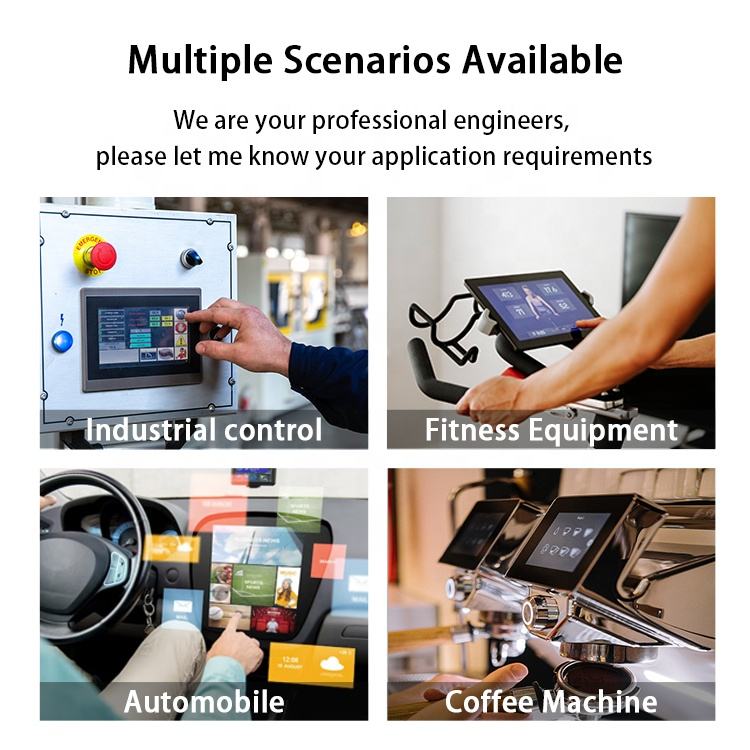
As industrial automation, medical equipment, smart retail, kiosks, renewable energy equipment and other industries continue to develop, capacitive touch screens have become an important human-machine interface component.
For OEMs and equipment manufacturers, product quality and pricing are important, but lead time is also a critical factor.
A delayed touchscreen can affect prototype testing, system integration, pilot production and even the final product launch.
So, how long does it actually take to manufacture a capacitive touch screen?
The answer depends on several factors.
Standard vs. Custom Capacitive Touch Screens
There is no single production lead time that applies to every capacitive touch screen project.
Standard products generally have more mature production processes and readily available materials, making them easier to schedule.
Custom touch screens require additional engineering and manufacturing steps.
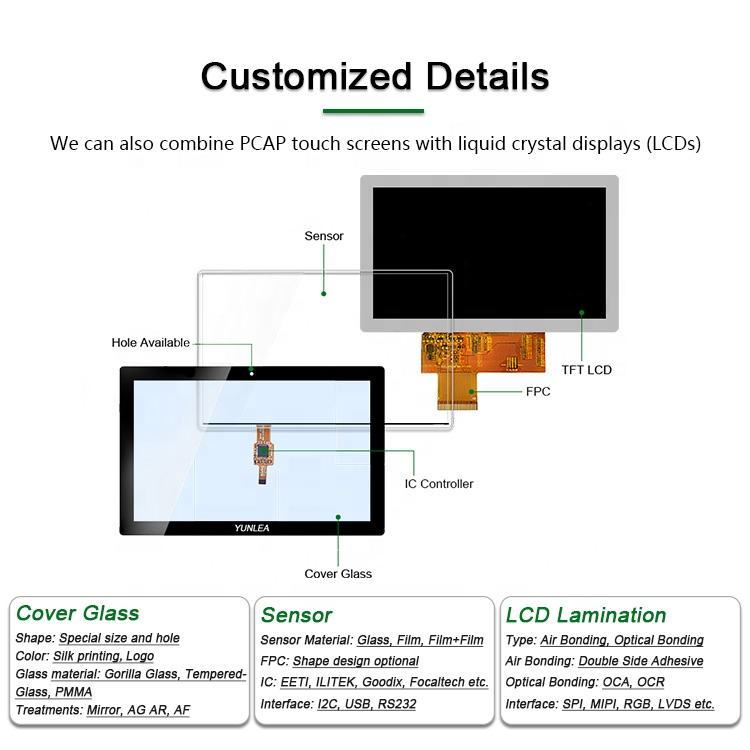
Typical customization requirements may include:
- Custom dimensions
- Custom-shaped cover glass
- Cut-outs and openings
- Narrow bezels
- G+G or G+F structures
- AG/AR/AF surface treatment
- Custom FPC positioning
- Touch controller matching
- Glove touch
- Water touch
- Optical bonding
The more customized the project is, the more important the engineering evaluation stage becomes.

What Determines Capacitive Touch Screen Lead Time?
1. Product Specifications and Customization
Product specifications are one of the most important factors affecting lead time.
A standard-size touch panel with a mature structure can usually move through production more efficiently.
A custom project may require engineering work such as:
- Cover glass design
- Sensor pattern design
- FPC routing
- Touch IC selection
- Touch area definition
- Mechanical integration
- Surface treatment
For custom-shaped touch panels, the engineering process becomes even more important because the mechanical design and touch sensor pattern need to work together.
2. Order Quantity
Order quantity also affects production planning.
A typical OEM project may include several stages:
Prototype → Pilot Run → Mass Production
For example:
- Prototype: 5–10 pcs
- Pilot production: 100–500 pcs
- Mass production: 1,000+ pcs
Providing the expected quantity at the quotation stage helps the manufacturer plan materials and production capacity more accurately.
3. Material Availability
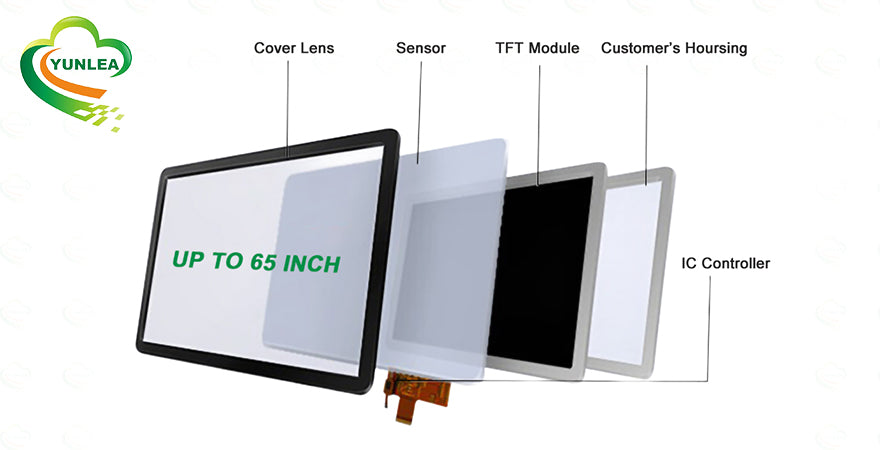
A capacitive touch panel consists of multiple components, including:
- Cover glass
- Touch sensor
- FPC
- Touch controller IC
- OCA
- Adhesive materials
- Surface treatment materials
If a project requires a specific glass thickness, customized FPC or a specified controller IC, material availability may affect the overall schedule.
For long-term OEM projects, supply-chain management is therefore an important consideration.
4. Does the Project Require Optical Bonding?
A touch panel and a complete touch display module are different production projects.
A complete module may involve:
Touch Panel + LCD + Optical Bonding
Additional processes may include alignment, bonding, debubbling/defoaming, inspection and functional testing.
Therefore, a project requiring a complete touch display module generally requires additional production time compared with a standalone touch panel.

Why Prototype Lead Time Matters
For OEM projects, producing a prototype is not simply a matter of manufacturing a few pieces.
A custom project may involve:
Drawing Review → Engineering Evaluation → Sensor Design → IC Matching → Prototype → Testing → Customer Validation
During this process, customers may discover that they need to modify:
- Glass dimensions
- Touch area
- FPC position
- Controller IC
- Surface treatment
- Glove-touch performance
- Water-touch performance
This is why prototype development and mass-production lead time should be evaluated separately.
A supplier capable of supporting rapid prototype development can help OEMs identify potential problems before mass production.
How to Choose a Capacitive Touch Screen Manufacturer
Lead time should not be evaluated by looking at one number alone.
When selecting a supplier, OEM buyers should consider:
Engineering Capability
Can the supplier review drawings, recommend structures and support touch-sensor design?
Manufacturing Capability
Does the supplier have experience with:
- Touch sensors
- Cover glass
- FOG bonding
- Touch controller integration
- Optical bonding
- Functional testing
- Mass production
Prototype Capability
Can the supplier quickly move from:
Drawing → Engineering → Prototype → Testing?
Long-Term Supply Capability
Can the manufacturer maintain consistent quality and production capacity after the project moves into mass production?
Yunlea: Custom PCAP Touch Screen Solutions
Yunlea provides customized PCAP capacitive touch screens and touch display solutions for OEM and ODM projects.
Its product portfolio includes:
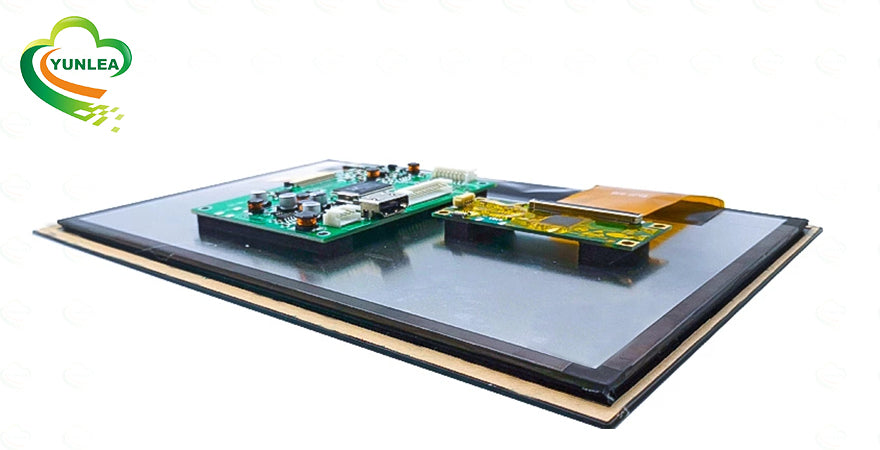
- PCAP capacitive touch panels
- Custom shape touch screens
- TFT LCD displays
- Optical bonding
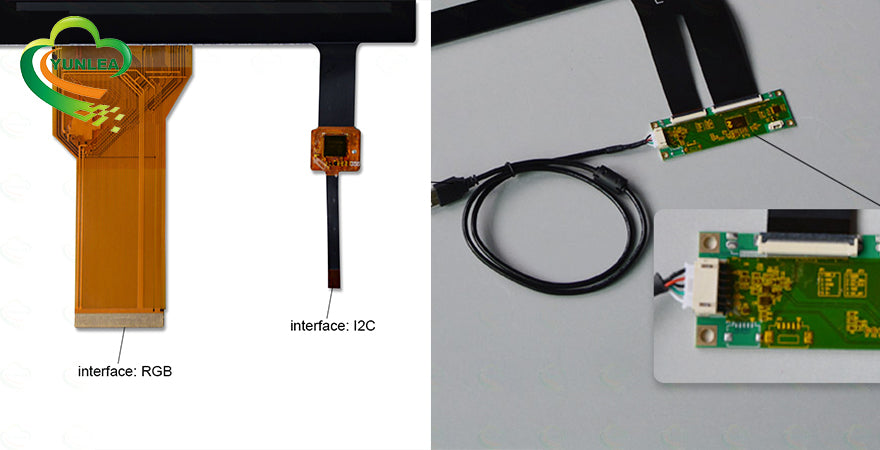
- Touch controller / driver board solutions
Yunlea supports touch products from approximately 1.44" to 65" and can customize dimensions, cover glass, interfaces, surface treatments and mechanical structures according to project requirements.
For a new project, providing the following information can help accelerate engineering evaluation:
- 2D/3D drawings
- Display size
- Touch area
- Cover glass requirements
- Touch structure
- Interface
- Operating environment
- Prototype quantity
- Estimated production volume

Don't Ask Only: "How Many Days for Delivery?"
For OEM procurement, a better question is:
"What is the complete project timeline?"
Ask the supplier to clarify:
| Project Stage | What to Confirm |
|---|---|
| Engineering | Drawing review time |
| Prototype | Sample development time |
| Testing | Validation time |
| Pilot Run | Small-batch production time |
| Mass Production | Production lead time |
| Materials | Special material availability |
| Delivery | Final shipping schedule |
This provides a much more realistic picture than simply receiving a general estimate such as "7–15 days."
Final Thoughts
The lead time of a capacitive touch screen depends on product specifications, customization requirements, order quantity, material availability and manufacturing processes.
Therefore, there is no universal production lead time for every project.
For OEMs, the most valuable supplier is not necessarily the one offering the shortest quoted lead time. Instead, look for a partner that can support engineering evaluation, rapid prototyping, stable production and long-term supply.
Yunlea provides customized PCAP capacitive touch screen and touch display solutions for OEM and ODM customers, with project lead times evaluated according to specific product requirements.PCAP Touch Screen