Choosing the Right Touch Panel Cover Lens for Your Project

In modern capacitive touchscreen design, the cover lens is far more than a simple protective layer. It directly impacts:
- Touch sensitivity
- Optical clarity
- Surface durability
- Product appearance
- Environmental resistance
- Long-term reliability
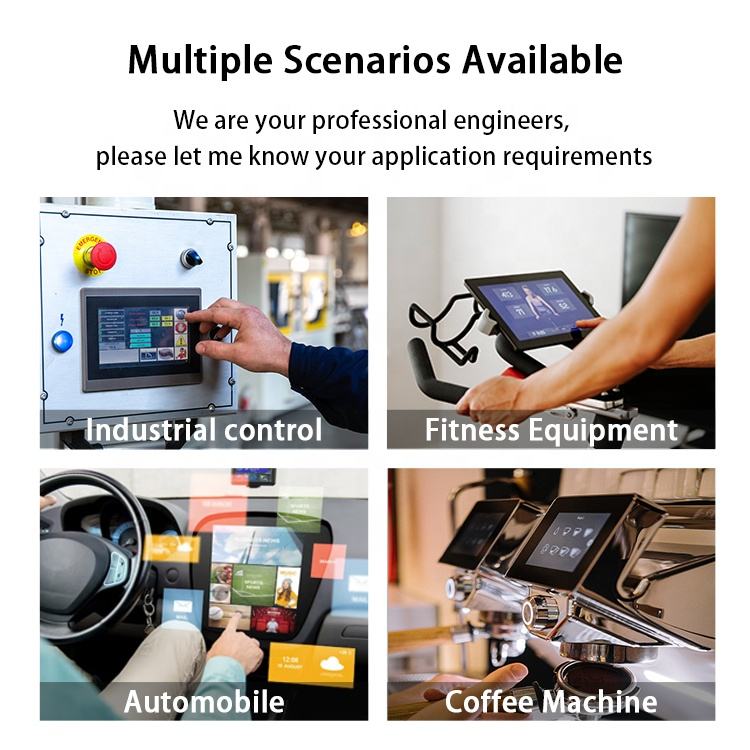
Different industries require different touchscreen performance characteristics. For example:
- Industrial equipment often prioritizes durability and stability
- Medical devices require high optical clarity and long service life
- Consumer electronics focus on lightweight structure and cost efficiency
- Automotive systems demand impact resistance and sunlight readability
At Yunlea, we provide custom capacitive touchscreen cover lens solutions tailored to different application environments and product requirements.
The most common cover lens materials include:
- Glass
- PMMA (Acrylic)
- PC (Polycarbonate)
- PET
This guide explains the characteristics, advantages, limitations, and recommended applications of each material to help you choose the right solution for your project.
1. Glass Cover Lens

Glass is the most widely used material in high-end capacitive touchscreens due to its superior durability and optical performance.
Key Features
- Surface hardness above 9H
- Light transmission over 92%
- Excellent scratch resistance
- Strong chemical and corrosion resistance
- Premium surface appearance
Advantages
Glass cover lenses provide:
- Outstanding long-term stability
- High-end visual appearance
- Excellent touch consistency
- Better environmental resistance
They are ideal for applications requiring high reliability and professional-grade performance.
Limitations
- More fragile than plastic materials
- Higher manufacturing and processing cost
Recommended Applications
- Industrial control systems
- Medical equipment
- Automotive touch displays
- Outdoor HMI devices
- High-end commercial equipment
2. PMMA Cover Lens (Acrylic)


PMMA, commonly known as acrylic, is a lightweight and cost-effective alternative to glass.
Key Features
- Surface hardness up to 4H
- Light transmission around 90%
- Lightweight structure
- Lower manufacturing cost
Advantages
- Excellent cost-performance ratio
- Good optical appearance
- Easier customization and machining
Limitations
- Lower scratch resistance
- Reduced high-temperature resistance
- Higher water absorption
- Increased risk of bubbles during lamination
- Higher dielectric constant may affect touch sensitivity
Recommended Applications
- Consumer electronics
- Smart home products
- Entry-level touch devices
- Portable electronics
PMMA is a practical solution when balancing functionality and budget.
3. PC Cover Lens (Polycarbonate)

PC (Polycarbonate) is known for its excellent impact resistance and flexible forming capability.
Key Features
- Surface hardness typically ≥ HB
- Light transmission around 89%
- Excellent impact resistance
- Easy thermoforming capability
Advantages
- Better impact resistance than glass
- Lower overall cost
- Suitable for curved or complex designs
Limitations
- Poor scratch resistance
- Limited heat resistance
- Less suitable for large capacitive touch panels
- Higher dielectric constant may reduce touch stability
Recommended Applications
- Portable handheld devices
- Lightweight electronics
- Budget-sensitive products
- Consumer terminals
PC materials are often selected when durability against physical impact is more important than surface hardness.
4. PET Cover Lens


PET materials are commonly used in ultra-thin and lightweight touchscreen designs.
Key Features
- Surface hardness around 3H
- Light transmission above 90%
- Thin and flexible structure
Advantages
- Extremely lightweight
- Low material cost
- Easy forming and processing
- Suitable for flexible structures
Limitations
- Limited scratch resistance
- Poor high-temperature performance
- Reduced touch stability compared with glass
- Not ideal for large touchscreens
Recommended Applications
- Compact electronic products
- Flexible touch solutions
- Low-cost devices
- Thin consumer electronics
PET is often used where ultra-thin design and lightweight construction are priorities.
How to Choose the Right Cover Lens Material
Selecting the right cover lens depends on several key project requirements.
1. Operating Environment
Industrial and outdoor applications usually require:
- Better durability
- Higher temperature resistance
- Stronger environmental stability
In these cases, glass is typically the best option.
2. Budget Considerations
For cost-sensitive projects:
- PMMA
- PC
- PET
can provide more economical solutions.
3. Optical Performance
Applications requiring:
- High transparency
- Premium appearance
- Better sunlight readability
benefit greatly from:
- Glass cover lenses
- Optical bonding technology
- AG / AR coatings
4. Mechanical Requirements
If the device requires:
- Strong impact resistance
- Lightweight structure
- Curved design capability
PC or PET materials may be more suitable.
5. Product Lifetime
For long-life applications such as:
- Industrial control
- Medical systems
- Automotive equipment
glass cover lenses provide the best long-term reliability and stability.
Custom Cover Lens Solutions from Yunlea
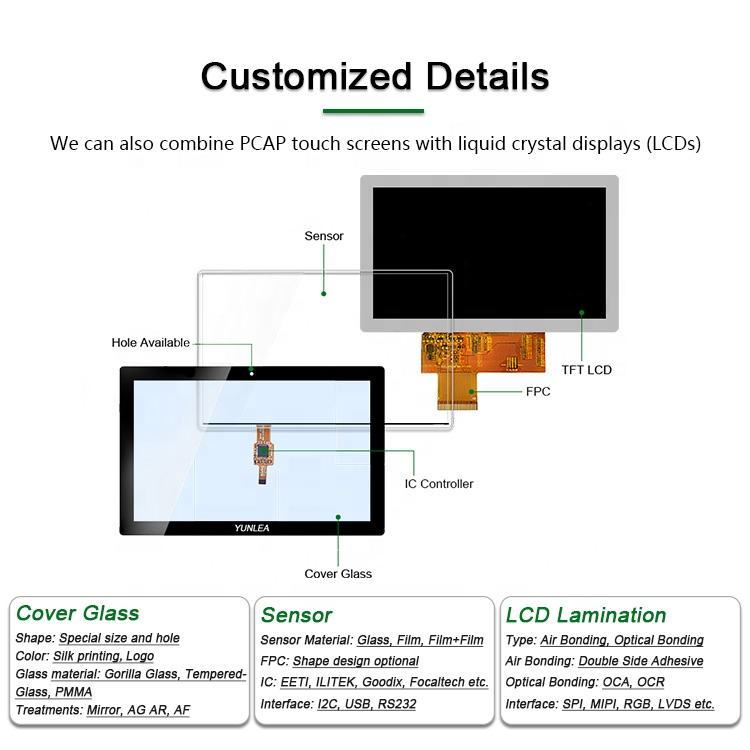
At Yunlea, we provide complete custom touchscreen cover lens solutions, including:
- Custom cover glass design
- AG / AR / AF surface treatments
- Silk printing and logo printing
- Optical bonding solutions
- Waterproof and glove-touch optimization
- EMI shielding design
- Industrial and medical-grade touchscreen customization
Whether your project requires:
- Ultra-thin structure
- High durability
- Better outdoor visibility
- Cost optimization
our engineering team can help develop the most suitable touchscreen solution for your application.
Why Work with Yunlea?
With years of experience in capacitive touchscreen manufacturing, Yunlea supports customers from concept development to mass production.
We help customers optimize:
- Touch performance
- Structural integration
- Optical clarity
- Environmental reliability
- Long-term product stability
Our solutions are widely used in:
- Industrial automation
- Medical devices
- Automotive systems
- Commercial equipment
- Smart home applications
If you are looking for a reliable touchscreen supplier for your next project, our team is ready to provide technical support and customized solutions.
Final Thoughts
The cover lens is one of the most critical components in a capacitive touchscreen system. Choosing the right material directly affects:
- Product durability
- User experience
- Display quality
- Environmental adaptability
- Overall product value
A properly selected cover lens can significantly improve product performance while reducing maintenance and long-term reliability risks.
At Yunlea, we help customers create customized touchscreen solutions that balance performance, appearance, and cost for real-world applications.