Optical Bonding for Touch Screen LCD: Why It Matters for Modern Display Applications

As display technologies continue to evolve, users increasingly expect screens to deliver excellent visibility, precise touch response, and long-term reliability under demanding environments.
For industrial equipment, medical devices, automotive displays, and outdoor kiosks, traditional air-gap displays often struggle with glare, poor sunlight readability, condensation, and reduced touch accuracy.
At Yunlea, optical bonding has become one of the most important technologies we apply to improve the performance of capacitive touch displays.
This article explains how optical bonding works, compares OCA and LOCA technologies, and helps engineers select the right solution for their applications.
What Is Optical Bonding?
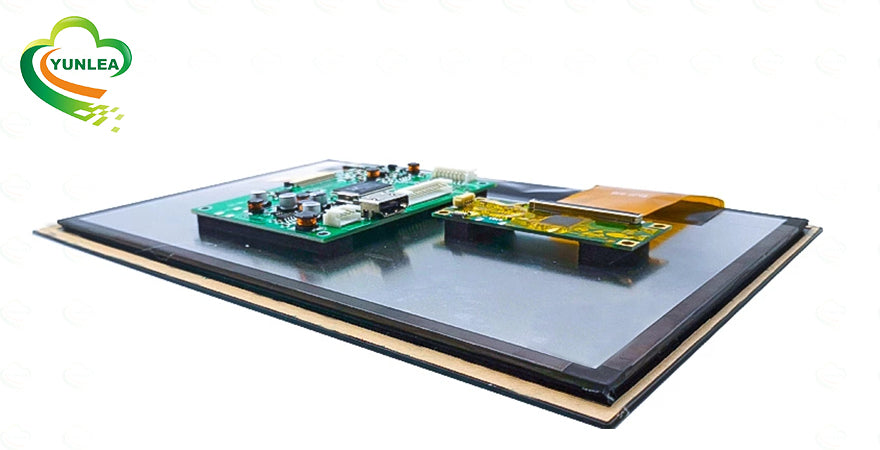
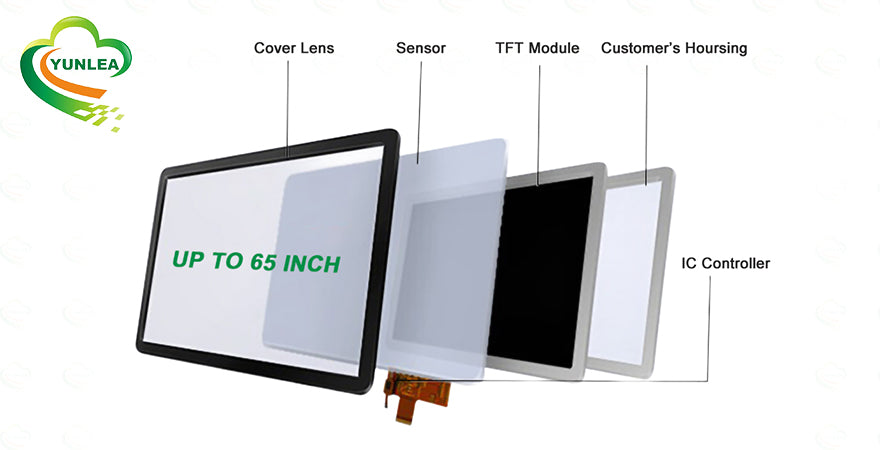
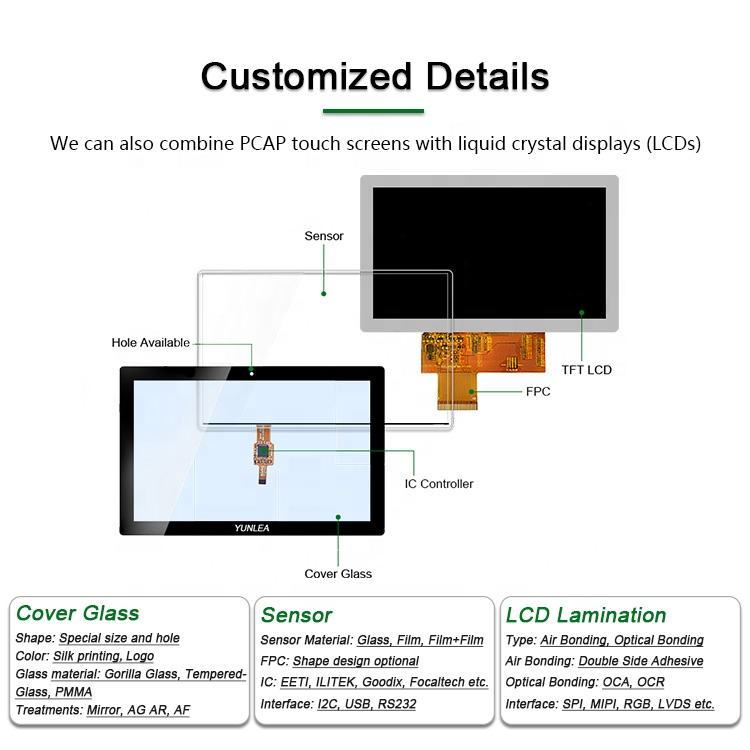
Optical bonding is a full-lamination process that permanently bonds:
- Cover glass
- Capacitive touch panel
- LCD module
into a single integrated display structure.
Instead of leaving an air gap between these layers, high-transparency optical adhesive completely fills the internal space.
The result is a zero-air-gap display.
Because the refractive index of optical adhesive closely matches glass, light passes through the display more efficiently, reducing internal reflection and improving image quality.
Compared with conventional air-gap structures, optically bonded displays provide:
- Higher contrast
- Better sunlight readability
- Lower reflection
- Improved touch accuracy
- Increased durability
📌 Recommended Image Placement #1:
Add a cross-sectional comparison image showing:
Air Gap Display vs Optical Bonding Structure
This visual immediately helps customers understand the core principle and greatly improves article engagement.
Why Air Gaps Reduce Display Performance
In traditional touch displays, air gaps between layers create multiple reflection surfaces.
This causes:
- Reduced brightness
- Lower contrast
- Increased glare
- Reduced outdoor visibility
- Touch parallax
As ambient light enters the display, some of the light reflects internally and never reaches the user's eyes.
Optical bonding eliminates these internal reflections, allowing the display to deliver clearer images and more accurate touch performance.
OCA vs LOCA: Two Major Optical Bonding Technologies
OCA Optical Bonding (Dry Bonding)

OCA stands for Optically Clear Adhesive.
It uses pre-cut transparent adhesive films to bond the touch panel and LCD together.
The bonding process is completed using precision lamination equipment inside a cleanroom environment.

Advantages of OCA
- Stable production quality
- High manufacturing yield
- Clean edges with no glue overflow
- Excellent optical performance
- Consistent thickness control
Limitations
- Higher material cost
- Difficult to apply on very large screens
- Limited ability to compensate for uneven surfaces

Recommended Applications
- 1.7" to 15.6" displays
- Automotive displays
- Smart home control panels
- Portable industrial devices
- Medical equipment
LOCA Optical Bonding (Liquid Bonding)

LOCA stands for Liquid Optically Clear Adhesive.
The liquid adhesive is dispensed directly onto the LCD surface before the touch panel is aligned and cured using UV light.
Advantages of LOCA
- Excellent gap-filling capability
- Ideal for uneven surfaces
- Lower material cost
- Suitable for large displays
- Good optical performance
Limitations
- Requires strict process control
- Risk of glue overflow
- More demanding production environment
- Potential yellowing if curing is insufficient
Recommended Applications
- Outdoor kiosks
- Large industrial displays
- Advertising displays
- Interactive monitors
- Touchscreens above 21 inches

Benefits of Optically Bonded Touch Displays
1. Better Sunlight Readability
Optical bonding can reduce surface reflections by more than 40%.
The result:
- Higher contrast
- Brighter images
- Improved outdoor visibility
This is especially important for:
- Outdoor kiosks
- Vehicle displays
- Marine equipment
- Industrial HMIs
2. Improved Dust and Moisture Protection
The fully sealed structure prevents:
- Dust intrusion
- Moisture penetration
- Internal condensation
- Fogging
This greatly improves reliability in:
- Humid environments
- Dusty factories
- Outdoor installations
3. More Accurate Touch Performance
Without an air gap, touch input becomes more precise.
Benefits include:
- Reduced touch parallax
- Faster response
- Better touch accuracy
- Improved user experience
4. Higher Mechanical Reliability
Optically bonded displays behave as a single structure.
This improves:
- Vibration resistance
- Shock resistance
- Structural strength
These benefits are especially valuable for:
- Construction equipment
- Transportation systems
- Industrial machinery

Critical Quality Factors in Optical Bonding
High-quality optical bonding depends on strict manufacturing control.
At Yunlea, several factors are carefully managed:
Cleanroom Environment
Bonding should be performed inside dust-free environments.
Even microscopic particles can create:
- Bright spots
- Bubbles
- Optical defects
Adhesive Matching
The optical adhesive must closely match the refractive index of glass.
Poor matching reduces the optical benefits.
Complete UV Curing
For LOCA processes, insufficient curing may cause:
- Yellowing
- Aging
- Reduced reliability
Bubble Removal
For OCA processes, complete bubble elimination is essential to ensure long-term stability.
Typical Applications of Optical Bonding
Optical bonding is widely used in demanding applications:
- Industrial control systems
- Medical displays
- Automotive touchscreens
- Outdoor kiosks
- Marine navigation equipment
- Agricultural machinery
- Smart transportation systems
- Outdoor IoT devices
📌 Recommended Image Placement #2:
Add a real application photo showing an industrial control panel, outdoor kiosk, or automotive display under direct sunlight.
This demonstrates the practical benefits of optical bonding and makes the article feel more localized and trustworthy.
Why Choose Yunlea Optical Bonding Solutions?
At Yunlea, we provide customized optical bonding solutions for various industries.
Our capabilities include:
- OCA bonding from 1.33" to 65"
- Large-size display bonding
- AG / AR / AF surface treatments
- Optical enhancement solutions
- Industrial-grade reliability testing
- Waterproof and glove-touch optimization
- Custom cover glass integration
Our engineering team helps customers improve:
- Outdoor visibility
- Touch accuracy
- Environmental resistance
- Product lifespan
Final Thoughts
Optical bonding has become an essential technology for modern touch displays.
By eliminating internal air gaps, it significantly improves:
- Display quality
- Sunlight readability
- Touch accuracy
- Reliability
- Product durability
Whether your project involves industrial equipment, medical devices, automotive systems, or outdoor displays, choosing the right optical bonding solution can dramatically improve both user experience and long-term performance.
At Yunlea, we help customers design reliable, high-performance touch displays optimized for real-world environments.