Can Capacitive Touch Screen Manufacturers Make Custom-Shaped Touch Screens?

As industrial equipment, medical devices, smart terminals, and new energy systems continue to evolve, equipment manufacturers are placing greater emphasis on product design and human-machine interaction.
Traditional rectangular touch screens are still widely used, but more OEM projects now require round, curved, ultra-wide, or custom-shaped touch interfaces.
So, can capacitive touch screen manufacturers make custom-shaped touch screens?
The answer is yes—manufacturers with strong engineering and customization capabilities can develop custom-shaped capacitive touch screens.
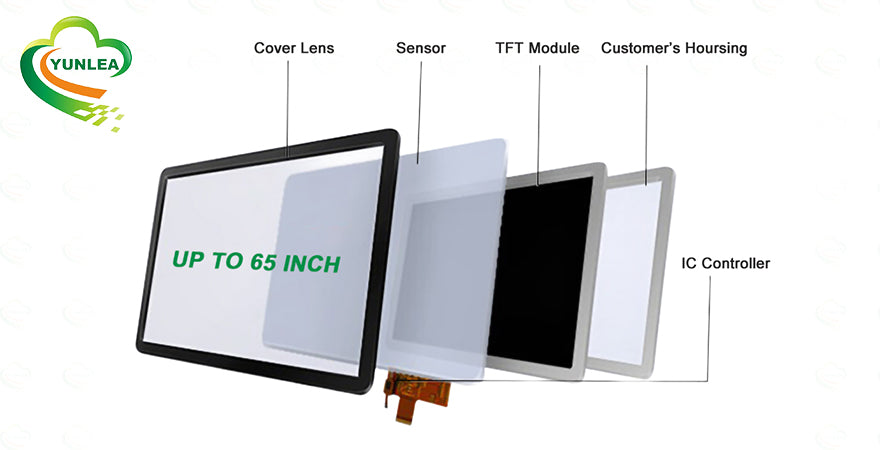
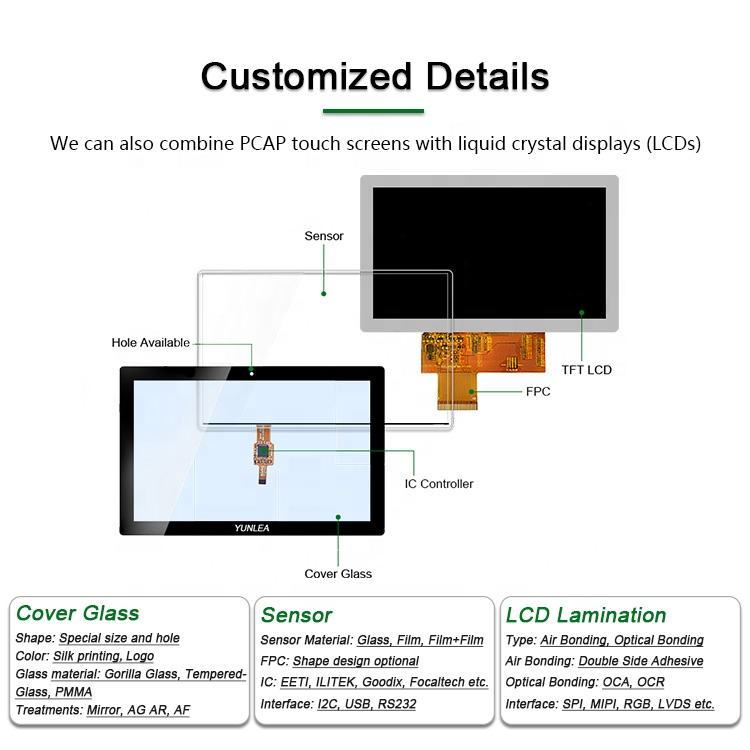
However, a custom-shaped touch screen is not simply a standard rectangular touch panel cut into a different shape. It often requires engineering work involving the cover glass, touch sensor, FPC, controller, and touch performance.

What Is a Custom-Shaped Touch Screen?
A custom-shaped touch screen is designed with a non-standard outline rather than a conventional rectangular format.
Common designs include:
- Round touch screens
- Oval touch screens
- Curved touch panels
- Touch screens with circular cutouts
- Touch panels with custom openings
- Ultra-wide touch panels
- Irregular-shaped touch screens
- Narrow bezel designs
Custom shapes allow the touch interface to better match the physical structure and industrial design of a device.
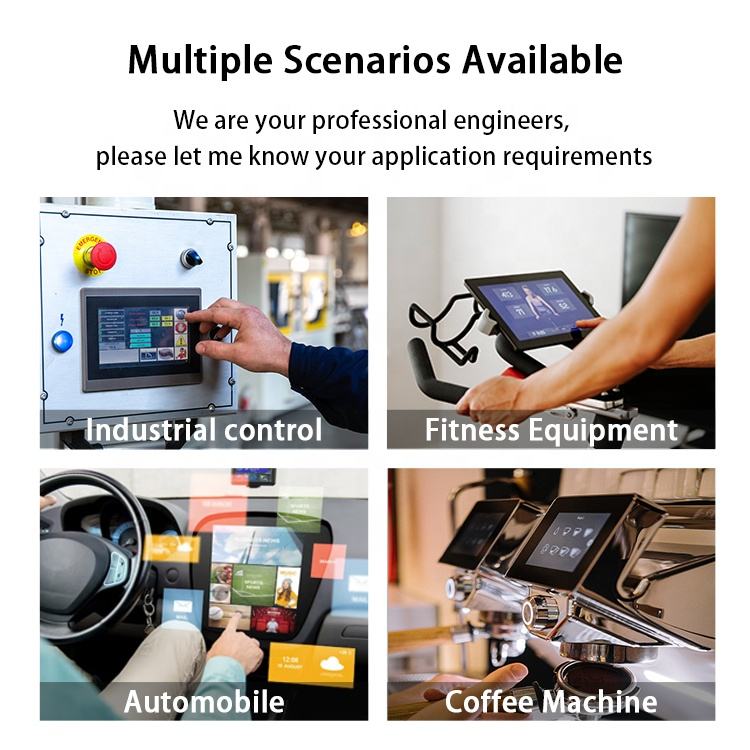
Typical applications include:
- Industrial control panels
- Medical equipment
- Smart home control panels
- Self-service kiosks
- Automotive systems
- Smart retail equipment
- Elevator control panels
- New energy equipment
Why Custom-Shaped Touch Screens Require Engineering Support
Developing a custom-shaped capacitive touch screen often involves more than changing the external dimensions.
The design may require adjustments to:
- Cover Glass
- ITO Sensor
- Touch electrode pattern
- FPC layout
- Touch controller parameters
- Printed border
- Logo window
- Cutouts and openings
Without proper engineering design, an irregular shape may affect touch sensitivity or create inactive areas near the edges.
For this reason, engineering capability is one of the most important factors when choosing a custom touch screen manufacturer.
Key Challenges in Custom-Shaped Touch Screen Development
1. Custom Cover Glass Processing
The cover glass may require custom processing based on the mechanical structure of the device.
Typical processes include:
- CNC glass cutting
- Custom openings
- Circular holes
- Irregular cutouts
- Rounded corners
- Edge finishing
- 2.5D glass
- Custom contours
More complex shapes usually require more detailed engineering evaluation, especially for products with narrow borders or multiple cutouts.
2. Custom Touch Sensor Design
The ITO sensor is one of the core components of a capacitive touch screen.
While standard rectangular touch panels can use mature sensor patterns, custom-shaped touch screens may require a dedicated sensor design.
Examples include:
- Round sensors
- Curved sensors
- Sensors with cutouts
- Irregular touch areas
The goal is to maintain stable touch performance across the usable area while minimizing inactive or insensitive regions.

3. Touch Performance and Reliability
Custom-shaped touch screens need to be evaluated carefully during prototype development.
Typical tests may include:
- Touch sensitivity
- Edge touch performance
- Multi-touch
- Glove touch
- Wet touch
- Mechanical reliability
- Optical performance
- LCD compatibility
Prototype validation can help manufacturers identify potential design issues before mass production.
What Manufacturing Capabilities Should You Look For?
When selecting a custom-shaped touch screen supplier, consider whether the manufacturer can provide:
- Engineering evaluation
- Custom cover glass processing
- Sensor design
- FPC development
- Touch controller matching
- Prototype development
- FOG bonding
- Optical bonding
- Functional testing
- Reliability testing
- Mass production support
A supplier with broader engineering and manufacturing capabilities may be better positioned to manage the entire development process.

Custom-Shaped PCAP Touch Screen Applications
Custom-shaped touch screens are increasingly used in applications where device appearance and mechanical integration are important.
Examples include:
- Round industrial control panels
- Medical equipment interfaces
- Smart home devices
- Automotive control systems
- Retail terminals
- Elevator panels
- New energy charging equipment
Depending on the application, additional customization may include:
- AG anti-glare treatment
- AR anti-reflection treatment
- AF anti-fingerprint coating
- Waterproof touch
- Glove touch
- Wet touch
- Custom printed borders
- Custom logo windows
Yunlea and Custom Touch Screen Development
For OEM projects that require custom sizes, shapes, or structures, engineering evaluation is usually an important first step.
Yunlea provides PCAP capacitive touch screen and touch display solutions for equipment manufacturers, including customized touch panels for different applications.
Customization options may include:
- Custom Shape Touch Screens
- Round Touch Screens
- Custom Cover Glass
- Touch Screens with Cutouts
- Narrow Bezel Designs
- AG / AR / AF Treatments
- Waterproof Touch
- Glove Touch
- Wet Touch
Depending on project requirements, touch screens can also be combined with TFT LCD displays, optical bonding, and controller solutions.
For a custom-shaped touch screen project, it is useful to prepare:
- 2D or 3D drawings
- DXF files
- Overall dimensions
- Viewing area
- Touch area
- Cutout requirements
- Glass thickness
- Interface requirements
- Application environment
- Estimated quantity
This information helps engineering teams evaluate the feasibility of the project more accurately.
Final Thoughts
Capacitive touch screen manufacturers can develop custom-shaped touch screens, but the feasibility depends on their engineering, glass processing, sensor design, prototyping, and manufacturing capabilities.
Compared with standard rectangular touch panels, custom-shaped products usually require more engineering evaluation and prototype testing.
For OEM manufacturers, it is therefore important to consider more than price.
Key factors include:
- Custom engineering capability
- Cover glass processing
- Sensor design experience
- Prototype development
- Quality control
- Mass production capability
- Long-term supply support
As equipment design becomes increasingly customized, custom-shaped capacitive touch screens are likely to become an important part of future HMI development.
For projects with special shapes, cutouts, or environmental requirements, early engineering communication and prototype validation can help reduce development risks and improve the chances of a successful product launch.