AR, AG & AF Glass Treatments for Professional Touch Screens

In today’s high-performance touch display market, glass surface treatment has become a critical factor in display quality and user experience. Whether used in industrial control panels, medical equipment, outdoor kiosks, or commercial touch monitors, the right surface treatment can significantly enhance visibility, durability, and touch performance.
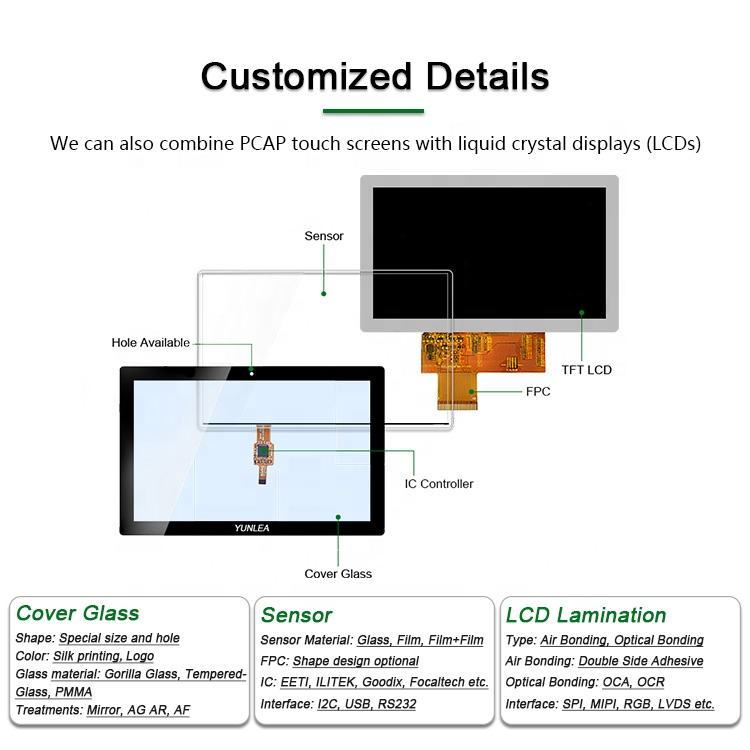
As a professional capacitive touch panel manufacturer, Yunlea provides advanced AR (Anti-Reflective), AG (Anti-Glare), and AF (Anti-Fingerprint) glass treatments designed to meet demanding application environments. These surface technologies help optimize display readability, improve touch interaction, and extend product lifespan.
Why Surface Treatment Matters for Touch Displays
Touch displays are often deployed in environments with strong ambient lighting, frequent user interaction, or harsh industrial conditions. Without proper glass treatment, issues such as glare, reflections, fingerprints, and reduced readability can negatively impact the user experience.
By applying professional glass treatments like AR, AG, and AF coatings, manufacturers can significantly improve:
- Optical clarity
- Viewing comfort
- Touch smoothness
- Surface cleanliness
- Long-term durability
1. AR (Anti-Reflective) Coating – Maximum Optical Clarity
AR coating is designed to reduce surface reflections and increase light transmission through the cover glass. By applying precision multi-layer optical coatings, reflected light waves are minimized, allowing more display light to pass through to the user's eyes.
This technology is especially important for high-end displays where visual accuracy and clarity are critical.
Key Benefits
- Significantly reduced mirror-like reflections
- Improved contrast ratio and color accuracy
- Enhanced readability under bright lighting
- Higher overall light transmission
AR coating is commonly used in:
- Medical monitors
- Industrial control displays
- Professional-grade touch systems
- High-brightness display equipment

2. AG (Anti-Glare) Treatment – Reduced Surface Glare
AG (Anti-Glare) treatment modifies the glass surface through controlled chemical or mechanical etching. Instead of reflecting incoming light directly, the surface diffuses the light, reducing harsh glare and improving viewing comfort.
AG glass is widely used in environments where strong lighting conditions are unavoidable.
Key Benefits
- Reduced glare from ambient lighting
- Improved visibility in bright environments
- More comfortable viewing experience
- Stable image readability
Typical applications include:
- Outdoor kiosks
- Retail POS terminals
- Self-service machines
- Industrial automation equipment

3. AF (Anti-Fingerprint) Coating – Cleaner Surface, Smoother Touch
AF (Anti-Fingerprint) coating applies a nano-scale hydrophobic and oleophobic layer to the glass surface. This reduces surface energy, making it more resistant to fingerprints, oil, and smudges.
In addition to keeping the screen cleaner, AF coating also improves finger glide, providing a smoother touch experience.
Key Benefits
- Reduced fingerprint residue
- Easier cleaning and maintenance
- Smooth finger movement across the surface
- Improved long-term appearance
While AF coating does not completely eliminate fingerprints, it significantly reduces their visibility and makes the screen much easier to clean — especially important for high-traffic touch applications.

Combining Surface Treatments for Optimal Performance
In many professional touch panel designs, multiple surface treatments are combined to achieve the best balance between clarity, glare reduction, and surface cleanliness.
Common combinations include:
AR + AF
- High optical clarity
- Reduced reflections
- Smooth touch interaction
AG + AF
- Reduced glare in bright environments
- Anti-smudge surface
- Comfortable viewing experience
Depending on the application requirements, the gloss level, haze value, and reflectance rate can also be customized.
Custom Glass Treatment Solutions from Yunlea
At Yunlea, we understand that different applications require different optical and surface performance targets. That’s why we provide customized glass treatment solutions tailored to your project needs.
Customization options may include:
- Adjustable haze levels
- Customized gloss levels
- Optimized reflectance rates
- Surface hardness and durability enhancements
- Industry-specific optical requirements

Applications of AR, AG, and AF Touch Screen Glass
Surface-treated touch panels are widely used across many industries:
Industrial Equipment
Control panels and HMI systems that operate in factory environments with strong lighting.
Medical Devices
Diagnostic equipment and medical monitors requiring clear and accurate display performance.
Commercial Displays
Self-service kiosks, POS systems, and information terminals with frequent user interaction.
Outdoor Systems
Ticket machines, charging stations, and outdoor control interfaces exposed to sunlight.

Conclusion
Glass surface treatments such as AR, AG, and AF coatings play a crucial role in optimizing the performance of professional touch screens. By reducing reflections, minimizing glare, and improving fingerprint resistance, these technologies greatly enhance both display readability and user interaction.
With extensive experience in capacitive touch panel manufacturing, Yunlea helps customers worldwide improve display performance through reliable and precision-engineered surface treatment solutions.
If you are developing industrial, medical, commercial, or outdoor touch devices, Yunlea’s AR, AG, and AF technologies can significantly elevate your product’s usability and visual quality.
Contact our team to discuss your custom touch panel project.
FAQ: AR, AG, and AF Touch Screen Glass Treatments
1. What is AR coating on touch screen glass?
AR (Anti-Reflective) coating is a multi-layer optical treatment applied to glass surfaces to reduce light reflection and increase light transmission. It improves display clarity and readability, especially in bright environments or high-brightness display applications.
2. What is the difference between AR and AG glass?
AR glass reduces light reflection by using optical coatings, while AG glass reduces glare by diffusing light through surface texturing.
- AR improves clarity and light transmission
- AG reduces harsh glare from ambient light
Both technologies can also be combined with AF coatings for better touch performance.
3. What does AF coating do on a touchscreen?
AF (Anti-Fingerprint) coating applies a hydrophobic and oleophobic nano layer on the glass surface. It helps reduce fingerprint marks, oil stains, and smudges while improving finger glide during touch interaction.
4. Can AR, AG, and AF coatings be combined?
Yes. In professional touch panel designs, surface treatments are often combined to optimize performance.
Common combinations include:
- AR + AF – high optical clarity with smoother touch
- AG + AF – glare reduction with fingerprint resistance
5. Which industries require AR, AG, or AF glass treatments?
These glass treatments are widely used in:
- Industrial control systems
- Medical equipment displays
- Outdoor kiosks
- Commercial touch monitors
- Self-service terminals